Ingredients & Sourcing
What is Makko Powder and Why Do You Need It?
Makko powder is an incense-making ingredient that helps wet powders hold together. Bark-based makko also helps a blend burn. You need it when your recipe...
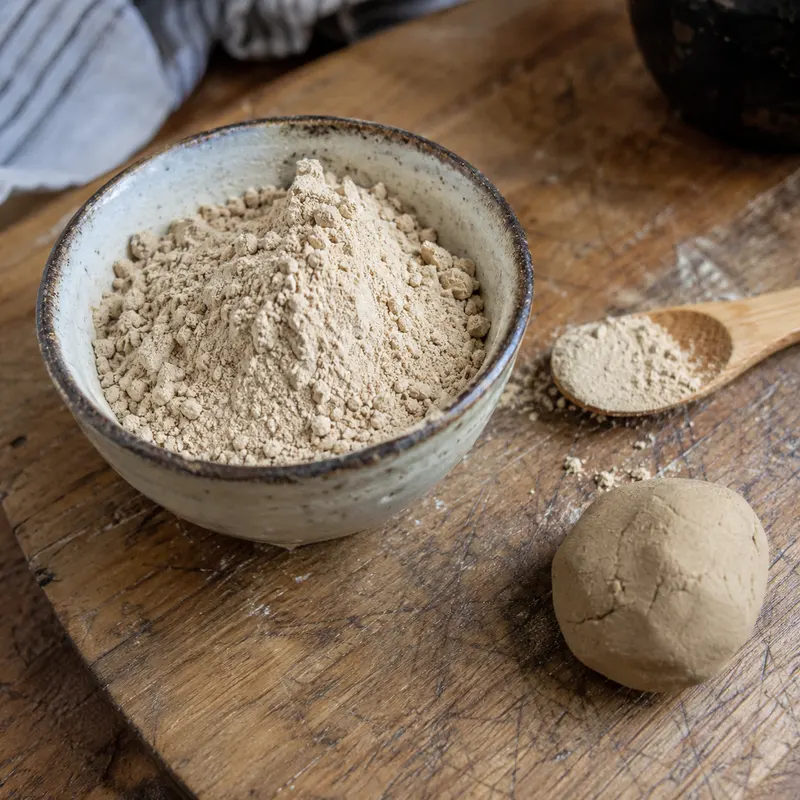
Makko powder is an incense-making ingredient that helps wet powders hold together. Bark-based makko also helps a blend burn. You need it when your recipe calls for that kind of binder, but the right amount depends on the recipe.
What is makko powder made of?
The bark binder commonly sold as makko comes from the tabu-no-ki tree, usually identified as Machilus thunbergii. It is finely powdered bark, not an essential oil. IncenseMaking's ingredient guide explains both the bark ingredient and the broader use of the word “makko” for incense powder.
That distinction matters when you shop. A packet called incense powder is not automatically the same product as a plain bark binder.
Before buying, check:
- Is it sold for binding incense dough, or as a finished scented powder?
- Does the supplier identify the ingredient?
- Are there added aromatic materials?
- Does the recipe use the same product you are buying?
Keep the packet label. If the batch behaves differently next time, the supplier or product may have changed.
What does makko do in incense?
Makko has two useful jobs:
- Binding: it helps the damp mixture form dough that you can shape.
- Burning: a combustible bark binder can help carry the ember through the blend.
Those jobs are related, but they are not identical. A dough can hold its shape and still produce a stick that goes out. IncenseMaking's guide to incense trails explains the role of combustible base materials in a burning mixture.
Makko is usually chosen because its scent is relatively mild. That does not mean it has no smell at all. Judge the finished, dry recipe, rather than expecting every binder to disappear completely.
Adding water without making a sticky mess
💧 Mix the dry ingredients first, then add water in small amounts. Pause to knead before adding more.
Watch what the dough does:
- Loose powder: it has not come together yet.
- A lump that cracks when shaped: check mixing and hydration before changing the formula.
- A soft mixture that smears: stop adding water and check the recipe.
- A dough you can pick up and shape: ready for a small trial stick.
KyaraZen's stick-making walkthrough shows why gradual water addition matters. Excess water makes dough harder to handle and can cause shrinkage problems.
Using one of our DIY kits? Follow its supplied recipe. Do not add an extra spoonful of binder just because another guide uses it.
Calculating Binder Percentages in Your Formula
There is no universal “perfect” makko percentage. Woods, leafy powders, resins and different binders do not behave alike.
When a recipe gives a percentage by dry weight, calculate it before adding water. For example, 20% of a 10 g dry batch is 2 g. That is a maths example, not a recommended recipe.
To compare a change fairly:
- Make a small batch.
- Record the weight of every dry ingredient.
- Change one ingredient at a time.
- Keep the trial sticks a similar thickness.
- Dry them fully before comparing how they burn.
If a batch crumbles, check the dough and shaping. If it keeps going out, check drying and the whole formula. Automatically adding more or less makko can hide the real cause.
What can I use instead?
Other incense binders exist, but they are not all direct replacements. Ask the supplier for a recipe using that specific binder. Do not swap equal spoonfuls and assume the scent, water needs and burning will stay the same.
Next steps: hand-roll your first stick, dry it in humid weather, and check a stick that will not burn.
👉 Want a starting point for home practice? Explore our DIY incense kits. For hands-on help with mixing and shaping, see our Ubud incense course.
Sources and further reading
- Supporting source: Makko powder, IncenseMaking. Botanical identity, binding and terminology.
- Supporting source: How to make incense trails, IncenseMaking. Combustible bases and makko's role.
- Supporting source: Incense stick making: a walkthrough, KyaraZen. Water addition and recipe-dependent binder needs.