DIY & How-To Guides
Why is My DIY Incense Not Burning? (Troubleshooting)
If your DIY incense will not stay lit, check drying, lighting and the holder before changing the formula. Then compare a small test batch. A stick going...
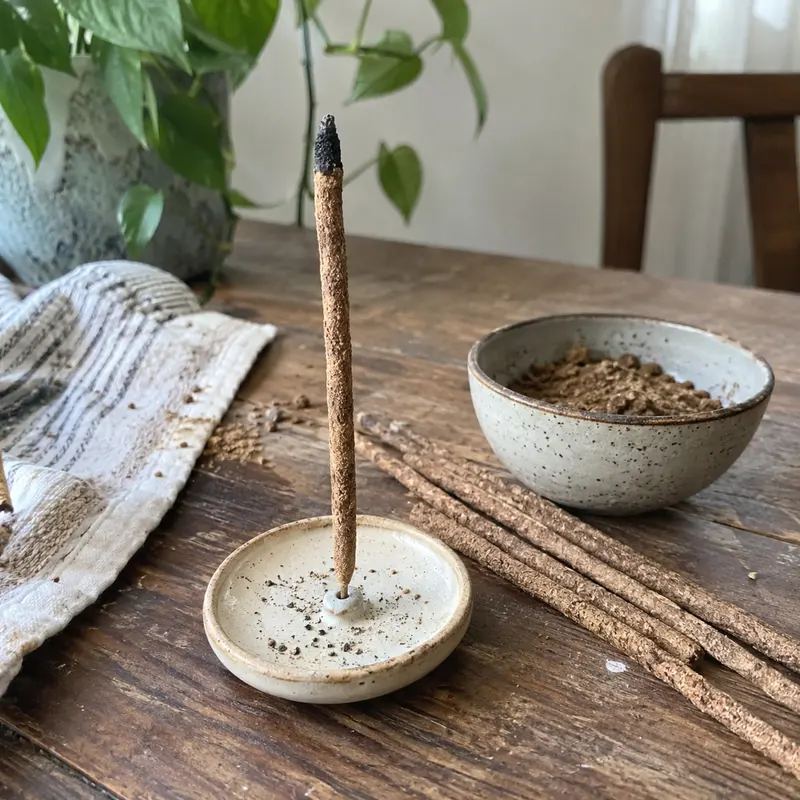
If your DIY incense will not stay lit, check drying, lighting and the holder before changing the formula. Then compare a small test batch. A stick going out is a clue about the materials or conditions, not proof that you need more binder.
Try these checks first
- Let one sample dry longer in a sheltered, airy place.
- Follow the lighting instructions for your incense. Check that a steady ember remains after the flame goes out.
- Use a holder made for that type of stick or cone. Keep the burning part exposed to air.
- Test away from a strong draft, on a stable, heat-resistant surface.
- Check whether the problem happens to one stick or the whole batch.
Never leave a test burning unattended. Keep it away from pets, children and anything that can catch fire.
It lights, then goes out quickly
Check moisture first
How long has it been drying? Were the sticks thick, touching each other or packed while still soft?
Try a longer drying period for one sample. If it now burns better, you have learned something useful without changing the ingredients. Our humid-climate drying guide helps you check the setup.
Manufacturers control drying conditions rather than relying only on the calendar. Nippon Kodo describes adjusting air, moisture and temperature during its drying process.
Check the lighting and holder
A tip that briefly flames is not always a stable ember. Follow the maker's instructions and look at what happens after the flame is extinguished.
If the stick repeatedly stops at the point where it enters the holder, check whether the holder covers the burning material. Do not keep relighting incense inside a tube or a narrow enclosed container.
Some sticks burn, others do not
Compare them side by side before mixing another batch:
- Is one much thicker?
- Does one have a large lump or a patch of exposed bamboo?
- Did they dry in different places?
- Does the ember stop at the same uneven section each time?
This comparison helps you decide whether to practise shaping or investigate the whole recipe. Aim for a similar coating along each stick. You do not need a perfect-looking first batch, but big changes in thickness make comparisons harder.
The whole dry batch keeps going out
Now review the formula. Are you using a tested recipe, or did you add extra resin, oil or leafy material?
A fragrant ingredient is not necessarily enough to keep a stick burning. IncenseMaking's trail guide explains why a combustible base is useful. That does not mean every loose powder blend will work as a shaped stick.
Check your notes:
- Did you measure dry ingredients by weight or by volume?
- Did you replace the binder with a different product?
- Did you add something the recipe did not include?
- Did you mix the dry powders evenly before adding water?
Makko is a combustible binder, so “too much makko” is not a diagnosis by itself. Read our makko guide before adjusting it.
For the next trial, change one thing and label the sample. A tiny comparison batch is more useful than remaking the whole jar with three changes at once.
Using a Sacred Smoke DIY kit?
Start with the instructions supplied with your kit. Keep any extra oils or resins out of that first batch. If it still will not burn after drying, contact us with:
- The kit name and recipe you followed.
- A photo showing the stick thickness.
- The drying time and room conditions.
- Where the ember stops.
That gives us something concrete to review. If you are choosing your first kit, compare the DIY incense kits here. 🌿
Does incense going out mean something spiritual?
Some people give incense a spiritual meaning. This guide deals with the physical making process. Check moisture, lighting, shape and recipe before treating an extinguished ember as a message.
Sources and further reading
- Supporting source: How incense is made, Nippon Kodo. Controlled drying in incense production.
- Supporting source: How to make incense trails, IncenseMaking. Combustible bases and mixture testing.